How prepaid cards boost cash flow
Written by Jakub Pitoňák
Updated for 2026
A prepaid digital card is a loyalty card in Apple or Google Wallet that the customer buys upfront with all the stamps or points already included. They use them gradually across visits. A traditional stamp card runs the other way, the customer collects stamps over time. The prepaid model flips your cash flow in your favor. You have the money on day one, the customer has a reason to come back.
- The customer pays upfront for a bundle and gets a discount (typically 15 to 30 percent)
- You have the full sum in your account on the day of sale
- One stamp is decremented at every visit
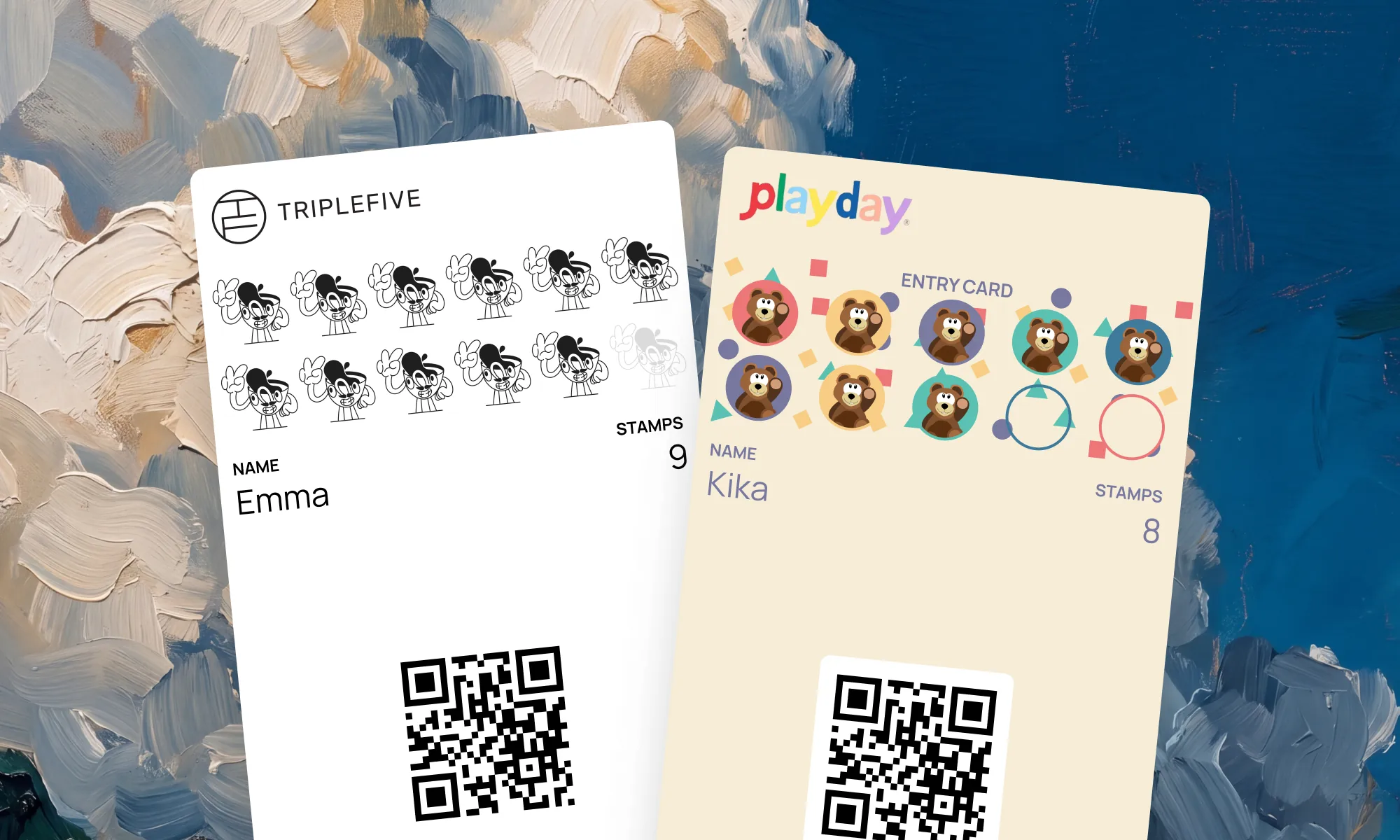
- The card adds to the phone via a simple QR scan
In this article we cover who the prepaid model works for, what discount ratio gives the best result, and how to set it up at Dotykačka, Storyous, Papaya, and OBERON.
What's the difference vs. a traditional stamp card?
A traditional stamp card and a prepaid card look similar from the outside (both might have 10 stamps). Economically they are completely different tools.
With a traditional card, the customer pays full price at every visit. Your till grows gradually. With a prepaid card, the customer pays the full sum at once, you get immediate revenue, and they get an economic reason to come back as many times as they prepaid for. The fear of having paid and not used it is a stronger motivator than the prospect of a small future reward.
Key takeaway:
- Traditional card. Gradual revenue, risk of incompletion.
- Prepaid card. Immediate revenue, higher completion rate (often 70 to 80 percent of customers finish the bundle).
- Prepaid works where the customer has stable brand loyalty.
Who the prepaid model works best for
Specialty cafes and pour-over coffee
Cafes with a higher-value product (single origin, V60, AeroPress) gain the most from prepaid. A customer who values quality and has loyalty to a barista or roastery will buy a 10-coffee bundle upfront with a discount instead of paying one at a time.
Wellness, massages, physiotherapy
Wellness clientele prefers regularity. Massage once a week, physio twice a month. A prepaid bundle of 5 or 10 sessions removes the per-visit decision. The client books slots in advance, you have a full calendar.
Fitness and sports clubs
Traditional monthly memberships have a weakness, they don't motivate regular attendance. A hybrid model, a 12-visit prepaid bundle with a three-month expiry, creates pressure to use it. Retention typically improves.
Restaurant catering
Corporate breakfast or lunch with a 20-meal prepaid bundle works great for small companies and co-working spaces. The restaurant gets guaranteed revenue, the company gets simplified billing.
What discount ratio gives the best ROI
The optimal discount ratio for a prepaid bundle is between 15 and 30 percent. Below 15 percent, customers don't feel enough benefit and bundles don't sell. Above 30 percent, margin slips into unhealthy territory.
A practical example for a cafe: a cappuccino at €2.80 with around 50 percent margin. A 10-coffee prepaid bundle with a 25 percent discount costs €21. You get money in the till immediately, the customer has a reason to come back 10 times and doesn't have to deal with cash at every visit. Even if they only use 8 of 10 coffees, you have no loss. The cash was in hand from day one.
Key takeaway:
- 15 to 30 percent discount sits in a healthy range
- Even at 70 percent utilization the bundle is not a loss
- The cash flow benefit is just as important as the ROI
How the prepaid system works in VEXiON cards
1. Configuration in the dashboard. In VEXiON cards admin, under "Card type," choose "Prepaid stamp card." Set the number of stamps in the bundle (e.g., 10) and the discounted price (e.g., €25). The system calculates the discount vs. the standard price automatically.
2. Selling the bundle at the counter. The customer pays for the bundle by card or cash. Staff in the POS (Dotykačka, Storyous, Papaya, OBERON) activate the prepaid bundle. The customer scans a QR code and the card with 10 stamps lands in Apple or Google Wallet.
3. Gradual redemption. At every visit staff scan the card. The system automatically decrements one stamp. The customer sees the remaining count on the card (e.g., "6 of 10").
4. Push notifications nudge. After 14 days of inactivity VEXiON cards automatically sends a reminder, "You have 4 coffees left in your bundle." Before expiry, a second notification. After the bundle is finished, an offer to renew with a discount.
Customers running the prepaid system
Hollerung in Bratislava introduced 10-coffee bundles at a 20 percent discount. After three months a third of regulars moved to the prepaid model and their visit frequency improved.
Triple Five Coffee offers prepaid not just on standard coffee but on alternative brewing methods. An 8-pour bundle sells especially to weekend visitors from out of town who come regularly and buy in advance for future trips.
THAI SUN Wellness uses 5-massage prepaid bundles at a discount. Clients book slots in advance, which dropped the no-show rate and lifted calendar utilization.
Do's and don'ts
Do:
- Set a sensible expiry (90 or 180 days). Without one, the customer parks the bundle indefinitely and you have no leverage to nudge a return visit.
- Show remaining stamps visually on the card (Apple and Google Wallet do this automatically).
- Send personalized notifications, "You have 4 coffees left, swing by this week."
- Offer a second bundle at a discount the moment the first finishes.
Don't:
- Discount too aggressively (40 percent or more). Bundles sell, but margin sinks below sustainable.
- Skip the expiry. Without it the cash sits as a perpetual liability in your books.
- Confuse the offer. The bundle should be simple ("10 coffees for €25"), not "8 coffees plus 2 desserts for €32."
Common questions
What's the difference vs. a gift card?
A gift card is a flexible monetary balance. The customer spends, say, €50 on anything from the menu. A prepaid card is a specific product bundle, 10 coffees or 5 massages. The prepaid card plays on visit frequency, a gift card is a pure cash equivalent. See the setup options on the gift cards page.
What if the customer doesn't finish the bundle in time?
If the bundle has an expiry (we recommend 90 to 180 days), unused stamps lapse after that point. This is legal under clear sale-time disclosure. In practice most customers complete the bundle on time.
What POS integration does the prepaid system need?
VEXiON cards works with Dotykačka, Storyous, Papaya, and OBERON. With integration, the bundle is activated directly from the receipt at checkout, no extra work. Without integration, staff scan QR codes via tablet or phone.
How do we account for prepaid bundles?
A prepaid bundle is a payment received against future fulfillment. In standard EU accounting, it's recognized as deferred revenue at sale and gradually released as stamps are redeemed. We recommend an accountant consultation at first launch.
Can I sell the bundle online?
Yes. VEXiON cards supports bundle sales online via Stripe. The customer pays on your website and the card is delivered by email with a link to add it to the wallet. Ideal for cafes with online ordering or wellness studios with a booking system.
Wrap-up: The most effective loyalty tool for steady regulars
The prepaid model is not for every business. It works where the customer has stable brand loyalty and visits regularly. For those businesses, in 2026, it's one of the most effective loyalty tools. It improves cash flow, lifts visit frequency, and reduces decision friction at every visit.
The most accurate way to find out if it will work for your business is to try it. Just write to us and we'll show you what a concrete setup would look like.